
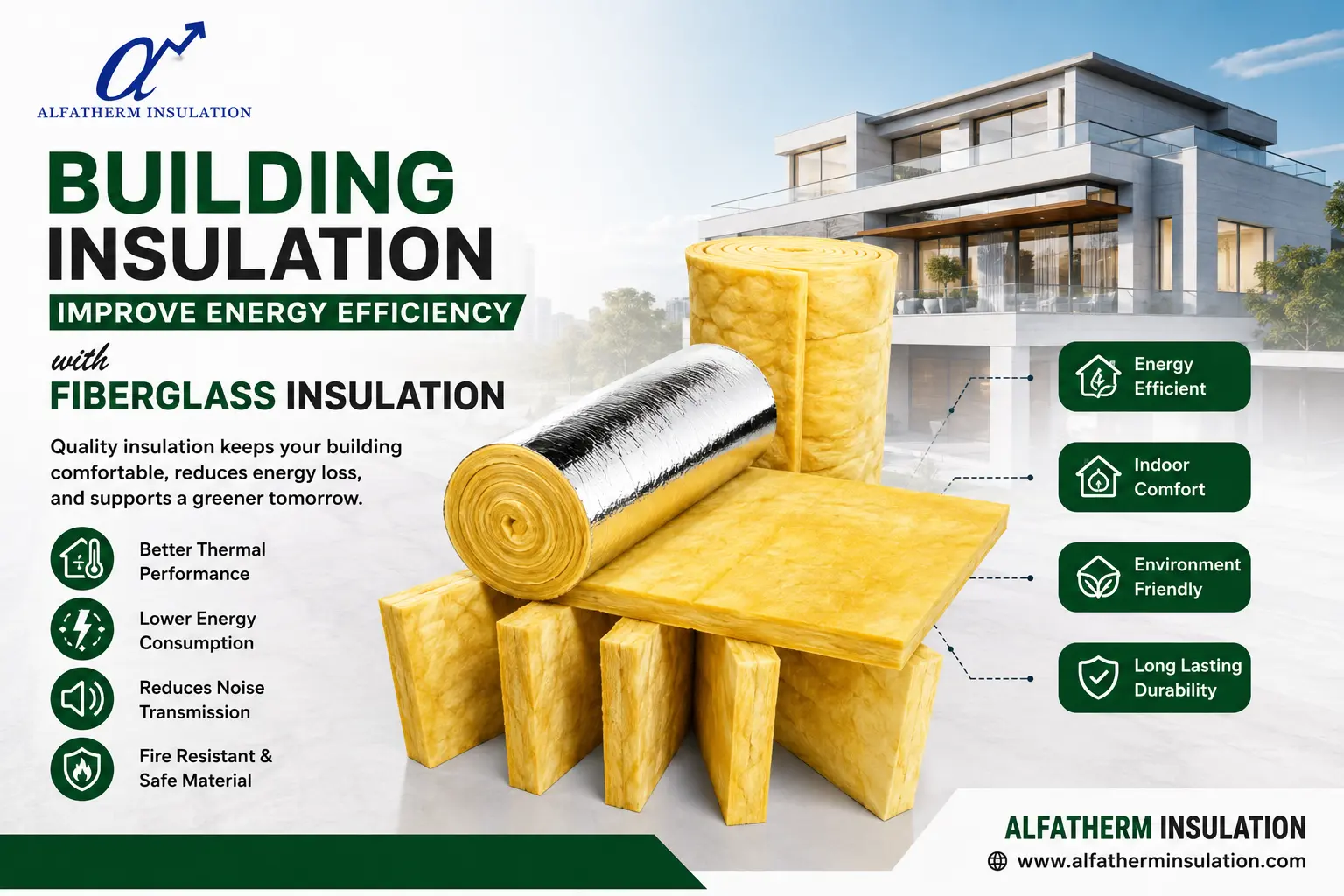
Building Insulation Improve Energy Efficiency with Fiberglass Insulation
Modern buildings are supposed to do more than offer shelter. They need to stay comfortable in changing weather conditions, reduce energy consumption and provide a safer and more efficient indoor environment. Building insulation has an important role to play in construction and building design.
An insulated building will minimize unwanted heat transfer between inside and outside. Insulation slows the transfer of heat in the summer and helps retain the heat in the winter. Consequently, the temperature stability is improved and the dependence on heating and cooling systems is decreased.
Alfatherm Insulation offers a variety of insulation solutions for residential, commercial and industrial applications. The right material depends on the building structure, temperature conditions, application and the required performance. From mineral wool and glass wool to ceramic fiber products and XLPE and XPS sheets as well as reflective insulation.
What Is Building Insulation?
Building insulation refers to materials and systems installed in walls, roofs, ceilings, floors, ducts, pipes, and other parts of a structure to reduce unwanted heat transfer. Depending on the material, insulation can also help reduce sound, resist fire and manage moisture.
Heat naturally moves from the warm area to the cool area. Insulation opposes this movement and helps keep indoor temperatures more constant. Some common areas where insulation can be installed include:
- Walls – interior and exterior
- Roofs and terraces
- Dropped ceilings
- Flooring
- Ducts for HVAC
- Piping and equipment
- Industrial enclosures
- Cold rooms and temperature-controlled areas
Therefore, the right building insulation solution has to be selected based on the project’s specific needs and not only the thickest or the most expensive material.
Why Is Building Insulation Important?
A well-insulated structure can provide several practical advantages. Energy efficiency is one of the biggest reasons builders and property owners invest in insulation, but it is not the only benefit.
- Enhanced Temperature Control
Insulation decreases the rate of heat transfer into or out of the building. Which means it is a good temperature inside the house.
- Reduced energy consumption
Heat transfer control reduces the work of air conditioners and heating systems. That could mean less energy use down the road.
- Better indoor comfort
Even with working HVAC, rooms can be uncomfortable with swings in temperature. A good insulation helps to create a more uniform indoor environment.
- Reduce Noise
Some insulating materials are able to absorb or reduce sound traveling through the air and are suitable for use in offices, homes, commercial buildings, studios and industrial areas.
- Fire Safety
Some insulation materials, particularly mineral wool and ceramic fibers, are very resistant to fire and high temperatures. However, the actual performance in a fire depends on the particular product and the system of installation.
Understanding Fiberglass Insulation
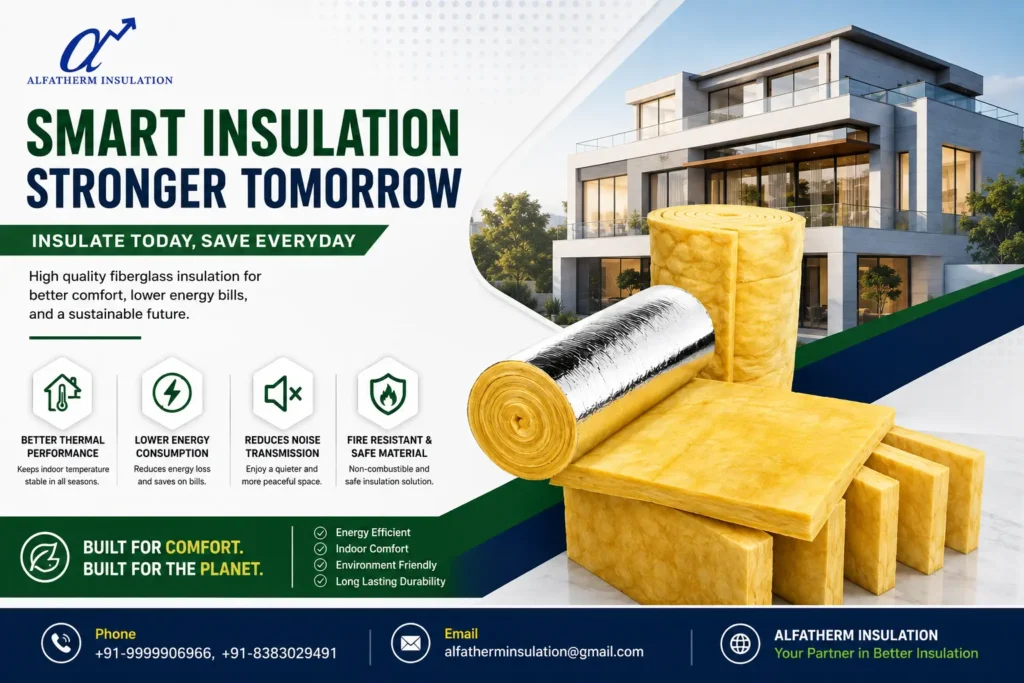
Fiberglass insulation is one of the widely used insulation solutions for buildings. It is manufactured using fine glass fibers and is available in different forms, including rolls, blankets, batts, and other configurations.
Its fibrous structure traps air and helps slow down heat transfer. This makes it suitable for applications where thermal insulation is required without adding excessive weight to the structure.
Typical applications of fiberglass insulation include:
- Walls
- Ceilings
- Roof spaces
- HVAC systems
- Ductwork
- Commercial buildings
- Industrial facilities
- Residential construction
Another advantage is its versatility. Depending on the product specification and installation method, fiberglass materials can support both thermal and acoustic insulation requirements.
Fiberglass Insulation vs. Other Materials
Fiberglass insulation is a common option, but it isn’t always the right material for every project. Mineral wool is specified where better fire resistance and acoustic performance is needed. Ceramic fibre is more suitable for high temperature applications such as furnaces, kilns and industrial equipment. Rigid insulation boards and moisture resistance are key requirements for many applications, making extruded polystyrene (XPS) a popular choice. Reflective bubble insulation operates in a different way to cut down on radiant heat transfer . It’s often used in roofs and other locations where reflective insulation is appropriate . So, great building insulation starts with understanding the application, not choosing a product based on price alone.
How to Choose the Right Insulation?
Before selecting an insulation material, several technical and practical factors should be considered.
Consider these factors:
- Thermal performance: Check the material’s thermal resistance and suitability for the expected temperature conditions.
- Application area: Walls, roofs, pipes, ducts, furnaces, and floors may require completely different insulation systems.
- Operating temperature: High-temperature applications require specialized materials such as ceramic fiber.
- Fire performance: Consider the fire classification and temperature resistance required for the project.
- Moisture exposure: Areas exposed to humidity or water may require materials with suitable moisture resistance.
- Acoustic requirements: For offices, homes, and commercial spaces, sound absorption may also be important.
- Installation requirements: Thickness, density, flexibility, fixing method, and available space can affect material selection.
- Service life: Consider the expected durability and maintenance requirements of the insulation system.
Building Insulation for Energy-Efficient Construction
Energy efficiency is becoming increasingly important in modern construction. Builders are paying more attention to the building envelope as rising energy costs, sustainability goals and the demand for comfortable indoor environments take hold. Good insulation in buildings can increase the efficiency of HVAC systems by reducing heat gain and heat loss. Insulation, however, should be considered as part of the total building strategy. Air leakage, windows, doors, ventilation, shading, roofing materials and HVAC efficiency are other factors that affect the overall building energy performance. Thus, insulation selection must be incorporated in the planning and design stage, rather than as an afterthought.
Applications of Building Insulation
Building insulation is used across a wide range of construction environments.
Residential Buildings
Homes can use insulation in walls, roofs, ceilings, and floors to improve indoor temperature control and comfort.
Commercial Buildings
Offices, hotels, shopping spaces, and institutional buildings often require thermal and acoustic insulation to create comfortable indoor environments.
Industrial Buildings
Factories and industrial facilities may require specialized insulation for equipment, ducts, process areas, roofs, and temperature-sensitive spaces.
HVAC Systems
Insulation around ducts and pipes helps control unwanted heat transfer and condensation while supporting system efficiency.
Warehouses and Specialized Facilities
Temperature-controlled environments may require carefully selected insulation systems to maintain specific operating conditions.
Why Choose Alfatherm Insulation?
Selecting a suitable insulation product is only one part of achieving good insulation performance. Product quality, application suitability, thickness, installation and technical specifications matter.
Alfatherm Insulation offers a wide range of insulation materials for a variety of thermal and industrial applications. The portfolio includes ceramic fibre products, mineral wool, fiberglass wool, XLPE, extruded polystyrene sheets, reflective insulation, resin-bonded slabs, pipe sections, building rolls and heat reflective wall paints. This large offer of products makes it easier to compare different solutions according to the different needs of the project, rather than a single solution for all.
Final Thoughts
Good building insulation is an important investment in the thermal performance, comfort, and efficiency of a structure. There is mineral wool for soundproofing and fireproofing , XPS for rigid insulation needs , ceramic fiber for high temperature conditions , fiberglass insulation for walls and ceilings , etc . Each one has its purpose .
The right solution depends on building design, application, environmental conditions, temperature range and performance requirements. Alfatherm Insulation offers a wide range of insulation products and solutions to help businesses, contractors, architects and building professionals assess the most suitable insulation products for a variety of applications. Building insulation done right does much more than just limit heat transfer – it becomes part of making buildings more comfortable, efficient and better performing.
0 comments