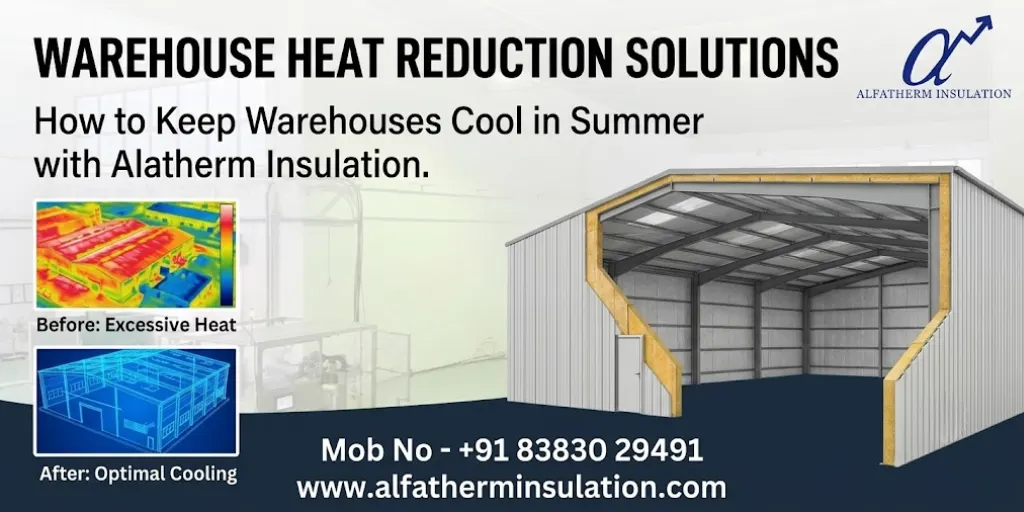
Warehouse Heat Reduction Solutions using insulation to keep warehouse cool in summer
Introduction
Summer temperatures can create serious challenges for warehouses, factories, storage facilities, distribution centers, and industrial buildings. As outdoor temperatures rise, heat can enter through roofs, walls, doors, windows, and other building surfaces. Without proper insulation, indoor warehouse temperatures can become uncomfortable and difficult to control.
Excessive heat inside a warehouse can affect employees, stored products, machinery, energy consumption, and overall operational efficiency. Businesses may need to use air conditioning systems, industrial fans, ventilation equipment, and other cooling solutions to maintain a comfortable environment. However, relying only on mechanical cooling can significantly increase electricity costs.
This is why businesses are increasingly searching for effective Warehouse Heat Reduction Solutions that can help reduce heat transfer and improve indoor thermal comfort.
For companies looking for practical insulation solutions, Alatherm Insulation offers a range of insulation products designed to support thermal performance and reduce heat transfer in commercial, industrial, and warehouse applications.
If you are wondering How to Keep Warehouse Cool in Summer, the answer begins with understanding how heat enters the building and implementing the right combination of insulation, ventilation, reflective materials, and energy-efficient cooling strategies.
Why Warehouses Become Extremely Hot During Summer
Warehouses often have large roof areas and extensive metal surfaces. These surfaces absorb significant amounts of solar radiation during the day. As the roof heats up, heat transfers into the interior of the building.
Several factors can contribute to high warehouse temperatures:
- Large metal roofs
- Direct sunlight
- Poor roof insulation
- Uninsulated walls
- Limited ventilation
- Large doors opening frequently
- Heat-generating machinery
- Poor air circulation
- High outdoor temperatures
- Inadequate building design
In many industrial buildings, the roof is one of the biggest sources of heat gain. A poorly insulated roof can allow solar heat to transfer directly into the warehouse, increasing indoor temperatures throughout the day.
How Heat Enters a Warehouse
Understanding heat transfer is important when selecting Warehouse Heat Reduction Solutions. Heat generally enters a warehouse through three primary methods.
1. Radiation
Solar radiation from the sun reaches the roof and walls of the building. Dark-colored metal roofs can absorb a large amount of solar energy, causing their surface temperature to rise.
2. Conduction
Once the roof or wall becomes hot, heat travels through the building material and moves toward the cooler interior space.
3. Convection
Warm air can move throughout the warehouse and increase the temperature of the entire indoor environment.
Effective insulation can help reduce heat transfer through these mechanisms and support a cooler indoor environment.
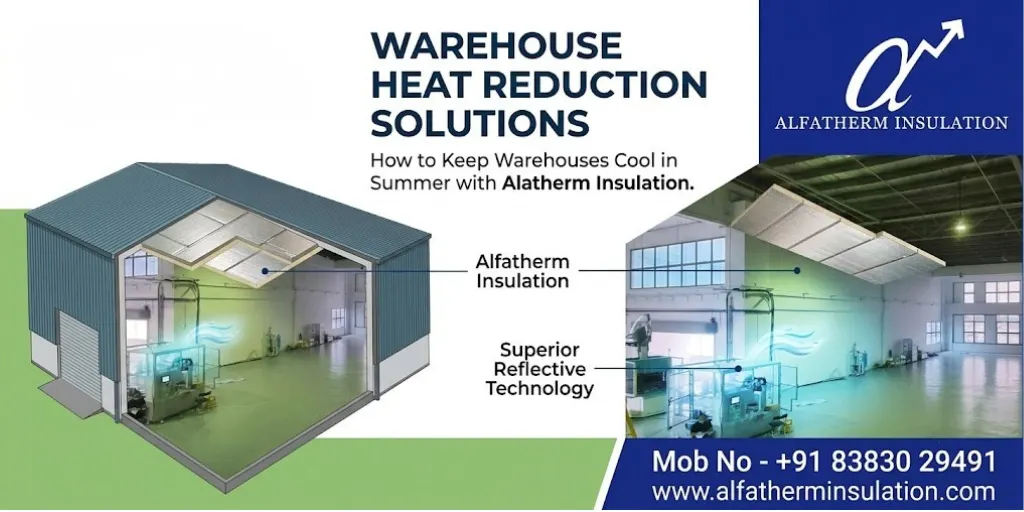
How to Keep Warehouse Cool in Summer
Businesses looking for ways to reduce warehouse temperatures should focus on a complete heat management strategy. The following solutions can help improve indoor thermal comfort and reduce cooling requirements.
1. Install Reflective Roof Insulation
One of the most effective ways to reduce heat gain is to install reflective insulation below the warehouse roof.
Reflective insulation works by reflecting a significant portion of radiant heat away from the building. This can help reduce the amount of solar heat transferred through the roof.
Products such as reflective bubble insulation and other specialized insulation materials can be used in suitable roof applications.
A reflective insulation system can help:
- Reduce radiant heat transfer
- Improve indoor thermal comfort
- Reduce heat entering through the roof
- Support lower cooling requirements
- Improve energy efficiency
For warehouses with large metal roofs, roof insulation can be one of the most effective places to begin a heat reduction project.
2. Use XLPE Insulation for Thermal Performance
XLPE insulation is widely used in various industrial and commercial applications because of its thermal insulation properties.
Cross-linked polyethylene insulation can help reduce heat transfer and support better temperature control in buildings.
For warehouses, XLPE insulation may be suitable for applications involving:
- Roof insulation
- Wall insulation
- Duct insulation
- Pipe insulation
- Industrial equipment
- HVAC applications
The right insulation thickness and installation method depend on the building design, roof structure, climate, and specific thermal requirements.
3. Consider Reflective Bubble Insulation
Reflective bubble insulation is another popular option for reducing radiant heat transfer in buildings.
It typically combines reflective surfaces with an air-filled layer that helps reduce heat transfer. When installed correctly, reflective insulation can help reduce heat entering through roofs and other surfaces exposed to direct sunlight.
This type of insulation can be particularly useful for:
- Warehouses
- Industrial sheds
- Factory buildings
- Storage facilities
- Agricultural structures
- Commercial buildings
Reflective insulation can be an important part of a broader warehouse heat reduction strategy.
4. Insulate Warehouse Walls
Although the roof is often the biggest source of heat gain, walls can also allow heat to enter the warehouse.
Metal walls exposed to direct sunlight can become extremely hot. Without proper insulation, heat can transfer from the external surface into the warehouse.
Wall insulation can help:
- Reduce heat transfer
- Improve indoor temperature stability
- Reduce the load on cooling systems
- Improve working conditions
- Support energy efficiency
Businesses should consider both roof and wall insulation when developing a complete thermal management plan.
5. Improve Warehouse Ventilation
Insulation reduces heat entering the warehouse, while ventilation helps remove hot air that is already inside.
Hot air naturally rises and can become trapped near the roof. Proper ventilation can help remove this accumulated heat and improve air movement.
Possible ventilation solutions include:
- Roof ventilators
- Exhaust fans
- Industrial ventilation systems
- Natural ventilation
- Air circulation fans
A combination of insulation and ventilation can often provide better results than relying on either solution alone.
6. Use Industrial Fans for Air Circulation
Industrial fans can help move air throughout a warehouse. Improved air movement can make the environment feel more comfortable for employees and may help prevent hot air from remaining concentrated in specific areas.
Fans do not eliminate heat entering the building, but they can support better air circulation when used alongside insulation and ventilation.
7. Reduce Direct Solar Heat Gain
Reducing direct solar exposure can also help lower warehouse temperatures.
Businesses may consider:
- Reflective roofing materials
- Cool roof coatings
- Shade structures
- External shading
- Reflective insulation
- Solar control solutions
Reducing solar heat at the building surface can help lower the overall heat load.
Benefits of Warehouse Heat Reduction Solutions
Implementing effective Warehouse Heat Reduction Solutions can provide several benefits for businesses.
- Improved Employee Comfort
Extreme heat can make warehouse work uncomfortable and physically demanding. Reducing indoor heat can help create a more comfortable working environment.
- Lower Cooling Costs
When less heat enters the warehouse, cooling systems may not need to work as hard. This can help reduce energy consumption and operational costs.
- Better Product Protection
Some products require controlled temperature conditions. Reducing excessive heat can help support better storage conditions for temperature-sensitive materials.
- Improved Equipment Performance
High temperatures can affect certain types of machinery, electrical equipment, and electronic systems. Better thermal control may help support more reliable equipment operation.
- Improved Energy Efficiency
A well-insulated warehouse can reduce the demand for mechanical cooling and contribute to improved energy efficiency.
- Long-Term Cost Savings
Although insulation requires an initial investment, it can provide long-term benefits through reduced energy consumption, improved comfort, and lower cooling requirements.
How Alatherm Insulation Can Support Warehouse Cooling
Alatherm Insulation provides insulation solutions for different commercial, industrial, and building applications. The right insulation product can help businesses reduce heat transfer and improve thermal performance.
Depending on the application, insulation solutions may include:
- Reflective bubble insulation
- XLPE insulation
- Aerolam insulation products
- Mineral wool insulation
- Fiberglass insulation
Different insulation materials provide different performance characteristics. Therefore, product selection should be based on the building structure, temperature requirements, installation conditions, and specific application.
For warehouses, insulation may be installed in roof systems, walls, ducts, equipment, and other areas where heat transfer needs to be controlled.
Why Roof Insulation Should Be a Priority
For many warehouses, the roof receives direct sunlight for several hours each day. This makes the roof a major source of heat gain.
Installing appropriate insulation below or within the roof system can help reduce the amount of heat transferred into the building.
Businesses considering How to Keep Warehouse Cool in Summer should first evaluate the condition and insulation performance of their roof.
A professional assessment can help identify:
- Heat entry points
- Roof insulation requirements
- Areas with poor thermal performance
- Suitable insulation materials
- Ventilation requirements
The Future of Energy-Efficient Warehouses
As energy costs increase and businesses focus more on sustainability, energy-efficient warehouse design is becoming increasingly important.
Modern warehouses are expected to use a combination of:
- High-performance insulation
- Reflective roofing
- Smart temperature monitoring
- Energy-efficient HVAC systems
- Natural ventilation
- Renewable energy
- Automated building controls
Thermal insulation will continue to play an important role in reducing energy consumption and improving indoor comfort.
By investing in the right insulation solution, businesses can reduce heat transfer and create more efficient facilities.
Conclusion
Keeping a warehouse cool during the summer is an important challenge for businesses across India. Excessive heat can affect employee comfort, product storage, equipment performance, energy consumption, and operational efficiency.
The most effective Warehouse Heat Reduction Solutions combine insulation, reflective materials, ventilation, air circulation, and efficient cooling systems. For businesses asking How to Keep Warehouse Cool in Summer, improving roof and wall insulation should be one of the first steps to consider.
With suitable insulation products and professional planning, businesses can reduce heat transfer, improve indoor comfort, and support better energy efficiency.
Alatherm Insulation provides insulation solutions designed for a wide range of commercial and industrial applications. Whether you need reflective insulation, XLPE insulation, fiberglass insulation, or mineral wool solutions, choosing the right product can help improve the thermal performance of your warehouse.
Investing in effective insulation today can help create a cooler, more comfortable, and energy-efficient warehouse for the future.
0 comments