
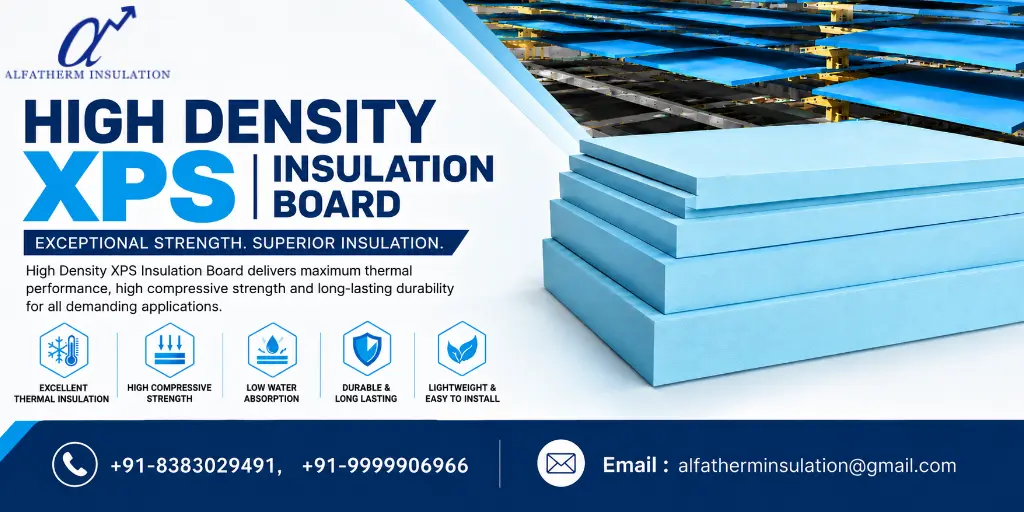
Reliable High Density XPS Insulation Board | Alfatherm Insulation
High Density XPS Insulation Board for Cold Storage: Reliable XPS Insulation Solutions by Alfatherm Insulation
Introduction
Thermal insulation plays an important role in modern construction, industrial facilities, warehouses, refrigeration systems, and temperature-controlled environments. Choosing the right insulation material can help reduce heat transfer, improve energy efficiency, protect temperature-sensitive products, and support long-term building performance. For applications that require high thermal resistance and moisture protection, a High Density XPS Insulation Board can be an effective insulation solution.
Extruded Polystyrene (XPS) insulation boards are widely used in applications where strength, thermal performance, moisture resistance, and dimensional stability are important. Their closed-cell structure helps provide reliable insulation performance in demanding environments. From commercial buildings to industrial facilities and cold storage units, XPS boards can support efficient thermal management.
For customers searching for dependable insulation solutions, Alfatherm Insulation provides insulation products designed for different industrial, commercial, and building applications. In particular, XPS Insulation for Cold Storage is an important solution for maintaining stable temperatures in refrigerated rooms, cold rooms, warehouses, food processing units, and other temperature-controlled environments.
What Is a High Density XPS Insulation Board?
A High Density XPS Insulation Board is a rigid insulation panel manufactured using an extrusion process. XPS insulation has a closed-cell structure that helps reduce the movement of heat and moisture through the insulation layer.
The high-density construction of the board provides enhanced mechanical strength compared with many conventional insulation materials. This makes it suitable for applications where insulation may be exposed to compression, heavy loads, moisture, or challenging operating conditions.
XPS insulation boards can be used in walls, roofs, floors, foundations, cold storage areas, refrigerated facilities, and other applications where thermal insulation is required. The exact product selection depends on the required thickness, thermal performance, compressive strength, installation method, and environmental conditions.
Why Choose XPS Insulation for Cold Storage?
Cold storage facilities require effective insulation because maintaining a low and stable temperature can consume significant energy. Any unwanted heat transfer through walls, ceilings, floors, doors, or other building components can increase the workload on refrigeration systems.
XPS Insulation for Cold Storage helps create a thermal barrier that can reduce heat transfer between the controlled-temperature interior and the surrounding environment. By supporting better thermal resistance, XPS insulation can contribute to improved energy efficiency and temperature management.
Cold storage insulation is commonly used in:
- Cold rooms
- Refrigerated warehouses
- Food storage facilities
- Dairy processing units
- Frozen food storage areas
- Pharmaceutical storage facilities
- Temperature-controlled logistics centers
- Industrial refrigeration facilities
- Food processing plants
The insulation system should be designed according to the required temperature range, building structure, humidity conditions, and overall refrigeration requirements.
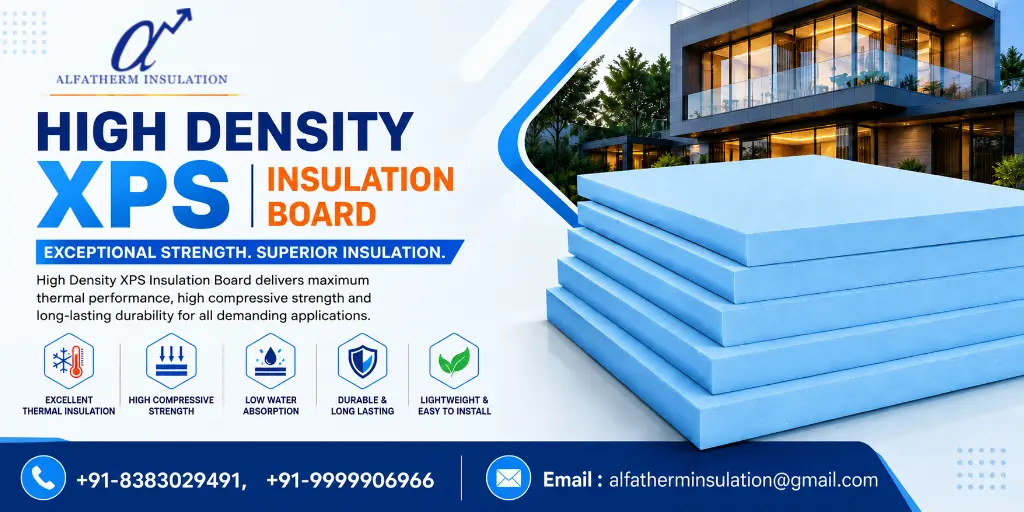
Key Benefits of High Density XPS Insulation Board
1. Excellent Thermal Insulation
One of the main advantages of XPS insulation boards is their ability to provide effective thermal resistance. The closed-cell structure helps reduce heat transfer and supports improved temperature control.
For buildings and cold storage facilities, better thermal insulation can help reduce the energy required to maintain the desired internal temperature.
2. High Compressive Strength
A High Density XPS Insulation Board is designed for applications where mechanical strength is important. The rigid structure can withstand compressive loads, making XPS suitable for certain flooring, foundation, roofing, and industrial applications.
3. Moisture Resistance
Moisture can reduce the performance of many insulation materials. XPS insulation has a closed-cell structure that helps provide resistance to water absorption. This makes it useful in areas exposed to moisture and humidity.
Moisture resistance is particularly valuable in cold storage and refrigeration applications where condensation and temperature differences may occur.
4. Lightweight and Easy to Handle
Despite its rigid structure, XPS insulation boards are lightweight compared with many other construction materials. This can make transportation, handling, cutting, and installation more convenient.
5. Long-Term Performance
When properly selected and installed, XPS insulation can provide long-term thermal performance. Its rigid structure and resistance to moisture can support durability in a variety of applications.
6. Versatile Applications
XPS boards can be used in commercial buildings, industrial facilities, cold storage units, roofs, floors, walls, foundations, and other construction applications.
Importance of XPS Insulation for Cold Storage Energy Efficiency
Energy efficiency is one of the biggest concerns for cold storage operators. Refrigeration equipment must work continuously to maintain the required temperature. Poor insulation can increase heat gain and place additional demand on cooling systems.
Using suitable XPS Insulation for Cold Storage can help reduce unwanted thermal transfer through insulated surfaces. This may support more stable internal temperatures and improve the efficiency of refrigeration operations.
However, insulation is only one part of a complete cold storage system. Proper installation, air sealing, vapor control, refrigeration system performance, doors, flooring, and facility design also play important roles.
A properly designed insulation system can help cold storage operators manage energy consumption and protect temperature-sensitive products.
Factors to Consider Before Choosing a High Density XPS Insulation Board
Before selecting an insulation board, it is important to evaluate the specific application.
- Board Thickness
The required thickness depends on the desired thermal performance, application, climate, and construction design.
- Thermal Performance
Review the thermal properties of the product to ensure it meets the insulation requirements of the project.
- Compressive Strength
For floors, foundations, and other load-bearing applications, compressive strength should be considered carefully.
- Moisture Exposure
If the insulation will be exposed to humidity, condensation, groundwater, or other moisture sources, moisture resistance becomes an important selection factor.
- Operating Temperature
Cold storage and refrigeration applications may require insulation suitable for specific temperature conditions.
- Installation Method
The board should be compatible with the intended installation system. Proper fitting and joint treatment are important for reducing thermal bridging and air leakage.
- Project Requirements
Every project has different requirements. The insulation solution should be selected according to building design, environmental conditions, performance targets, and applicable construction practices.
Why Choose Alfatherm Insulation?
Alfatherm Insulation provides insulation solutions for industrial, commercial, and construction applications. Customers looking for a High Density XPS Insulation Board or XPS Insulation for Cold Storage can benefit from selecting an insulation supplier that understands the importance of thermal performance and application requirements.
Alfatherm Insulation focuses on providing insulation products for different requirements, including:
- Thermal insulation
- Industrial insulation
- Cold storage insulation
- Building insulation
- Energy-efficient construction
- Moisture-resistant insulation applications
Choosing the right insulation product is essential for achieving reliable long-term performance. Alfatherm Insulation can help customers evaluate their project requirements and identify suitable insulation solutions.
Installation Best Practices for XPS Insulation Boards
Correct installation is important for achieving the expected performance of XPS insulation. Boards should be installed according to the recommended application method and project requirements.
Important installation considerations may include:
- Preparing a clean and suitable surface
- Ensuring boards fit properly
- Minimizing gaps between insulation panels
- Properly treating joints where required
- Avoiding unnecessary damage during handling
- Protecting insulation from unsuitable environmental exposure
- Following manufacturer recommendations
In cold storage applications, special attention should be given to joints, thermal bridges, vapor control, doors, corners, and transitions between different building elements.
Professional installation can help ensure that the insulation system performs effectively over the long term.
XPS Insulation for Modern Energy-Efficient Buildings
Energy efficiency has become an important consideration in modern construction. Buildings that are properly insulated can reduce heat transfer and improve indoor temperature control.
A High Density XPS Insulation Board can be used as part of an overall building envelope strategy. By improving the thermal performance of selected building components, insulation can support more efficient heating and cooling operations.
For industrial and commercial buildings, effective insulation may also contribute to improved occupant comfort and reduced operational energy requirements.
Maintenance and Durability of XPS Insulation
One of the advantages of rigid XPS insulation is its durability when used correctly. However, the overall performance of an insulation system depends on the quality of installation and the surrounding construction system.
Regular inspection may be useful in areas where insulation is exposed to mechanical damage, water, construction activity, or changes in building conditions.
For cold storage facilities, maintenance should also include checking for damage, gaps, moisture-related problems, and areas where thermal performance may be compromised.
Conclusion
Choosing the right insulation material is essential for improving thermal performance, energy efficiency, moisture protection, and long-term building durability. A High Density XPS Insulation Board offers a combination of thermal resistance, compressive strength, moisture resistance, and versatility for a variety of applications.
For cold rooms, refrigerated warehouses, food storage facilities, and other temperature-controlled environments, XPS Insulation for Cold Storage can help create an effective thermal barrier and support efficient temperature management.
If you are looking for reliable XPS insulation solutions, Alfatherm Insulation can help you explore suitable products for your specific requirements. By considering thermal performance, thickness, compressive strength, moisture conditions, operating temperatures, and installation requirements, you can select the right insulation solution for your project.
0 comments